

Keywords: Audace Pharma, Audace Vietnam, Gout, Stages of Gout, Blood Uric Acid, Normal Uric Acid levels, Acute Gout symptoms, Causes of Gout, Gout diagnostic imaging, Internal medical treatment for Gout, Gout complications, Intensive joint care, Preventing Gout recurrence, Gout treatment methods, High-risk groups for Gout.
-
What is Gout?
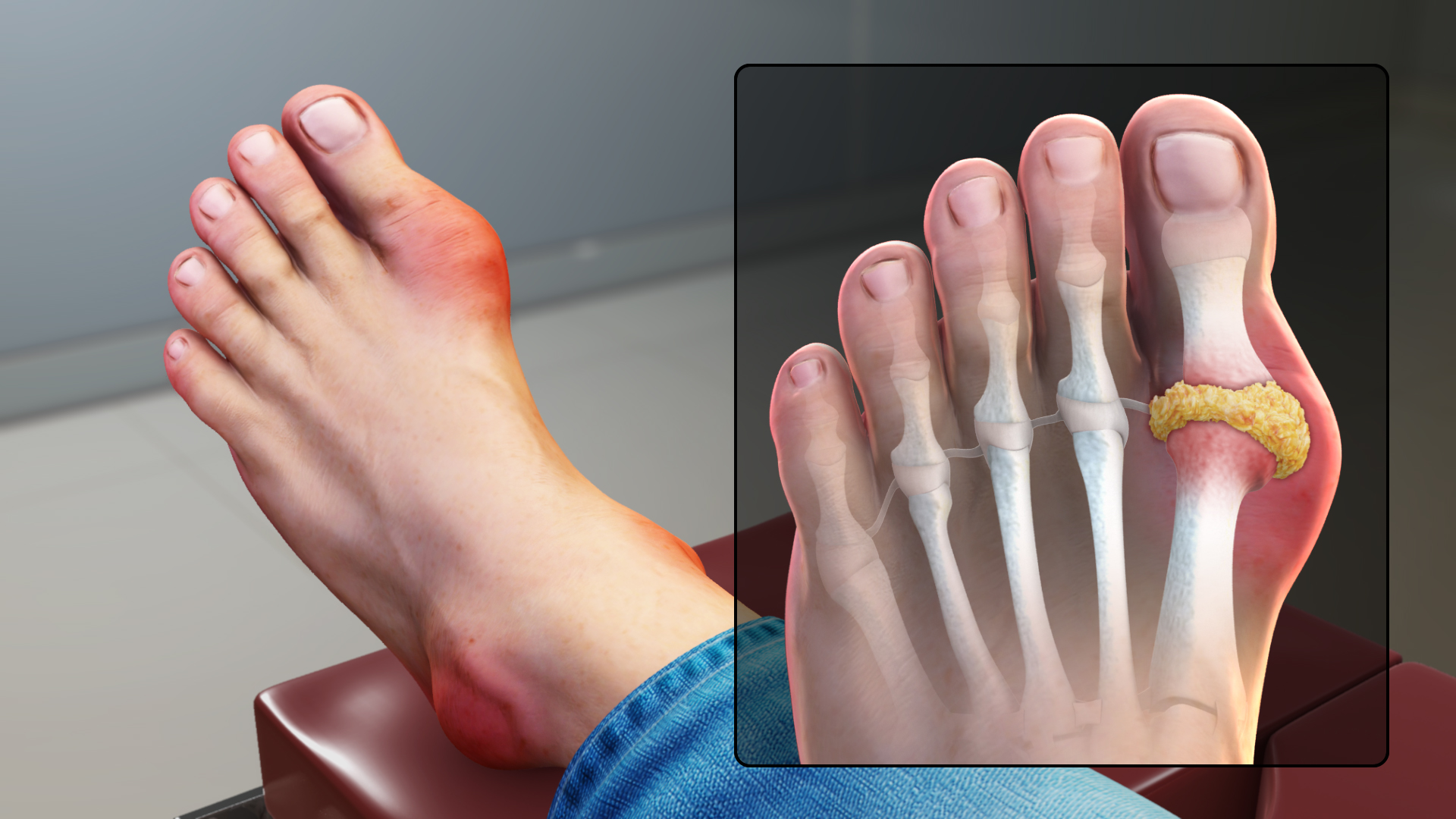
Gout is a form of arthritis that occurs when there is an excess of uric acid in the blood, leading to the formation of sharp crystals that deposit in the joints. This causes swelling, redness, and intense pain in various joints across the body, such as fingers, elbows, hands, wrists, toes, and ankles.
The disease has a high recurrence rate and causes significant pain. Under favorable conditions, the condition can progress rapidly.
According to scientists, the prevalence of Gout is higher in men than in women, particularly from the age of 30 onwards. With modern socio-economic development, changes in eating habits, nutrition, and lifestyle have led to a rising trend in Gout cases, with the age of onset becoming increasingly younger. Gout causes prolonged, uncomfortable pain that impacts the patient’s overall health and daily activities. However, the disease can be treated and recurrence can be prevented with a healthy lifestyle and timely medical intervention.
-
Causes of Gout
Primary causes of the disease
Gout is fundamentally caused by a disorder in uric acid metabolism. In Vietnam, the excessive consumption of alcohol and a diet overly rich in protein are the primary drivers of uric acid metabolic imbalances, leading to Gout.
Uric acid is a byproduct of the physiological breakdown of purines found in DNA and RNA. Once formed, this acid enters the bloodstream and travels to the kidneys, where it is filtered and excreted from the body. When blood uric acid levels rise too high, the kidneys cannot filter it fast enough, causing the acid to accumulate and crystallize into urat crystals within tissues, particularly in the joints. As these crystals accumulate, they cause inflammation and intense pain, resulting in Gout.
Additionally, Gout can be hereditary or triggered by environmental factors that increase uric acid production or impede its timely excretion from the body.
Factors that increase the risk of Gout
Factors affecting blood Uric Acid indices Uric acid concentration in the blood is influenced by both endogenous (internal) and exogenous (external) factors.
- Exogenous factors: A diet high in purines – such as beef, organ meats, shellfish, and certain saltwater fish – directly increases the supply of uric acid. The consumption of ethanol from beer and wine accelerates the breakdown of ATP into purine bases. Furthermore, when ethanol is metabolized into lactic acid, it competes with uric acid for excretion in the renal tubules, thereby reducing the kidneys’ ability to eliminate the acid.
- Endogenous factors: Conditions such as obesity increase the body’s natural synthesis of purines. Moreover, the use of certain blood pressure medications, such as thiazide diuretics or low-dose aspirin, interferes with the excretion of uric acid through urine, increasing the risk of acute joint pain.
Specific risk factors include:
- High-protein diet: Excessive consumption of purine-rich foods, including seafood, mushrooms, eggs, and organ meats.
- Kidney pathology: Conditions like glomerulonephritis or kidney failure reduce the kidneys’ excretory function, leading to increased uric acid accumulation. Cardiovascular conditions such as acute leukemia, high blood pressure, and congenital heart disease also play a role.
- Substance and alcohol use: Regular consumption of stimulants and alcohol significantly raises the risk of Gout.
- Medication side effects: Using drugs that elevate blood uric acid levels, such as aspirin, diuretics, cytotoxic drugs used in cancer treatment, and certain hypertension medications.
- Genetics and Demographics: Having a family history of Gout increases risk. Age and gender are also significant; men are at higher risk than women, typically between the ages of 30 and 60.
- Weight: Being overweight or suffering from obesity.
-
Clinical Progression Stages and Symptoms of Gout
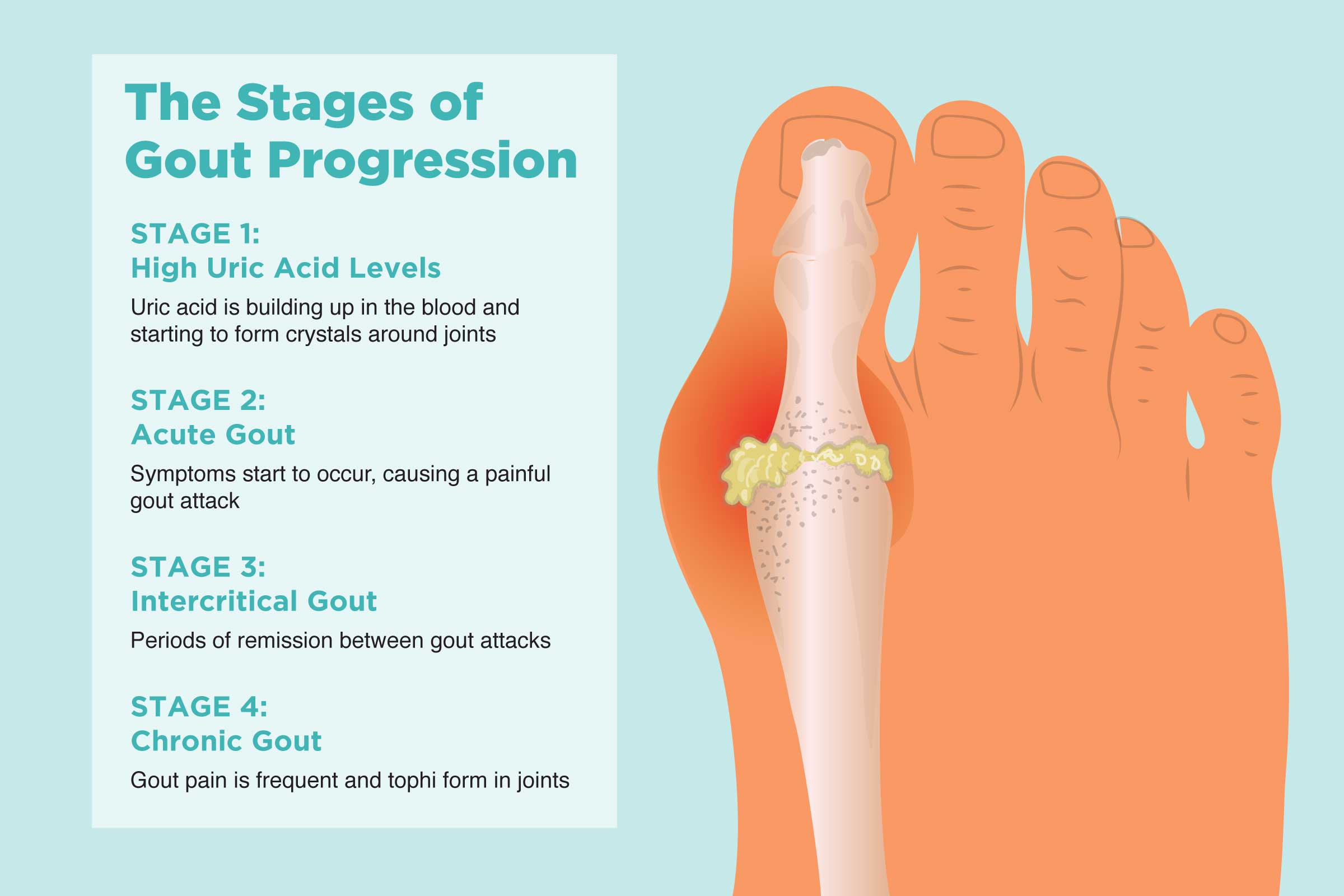
Gout progresses through four clinical stages, each with distinct biological characteristics:
- First Stage: Asymptomatic Hyperuricemia. In this stage, Uric Acid levels in the blood are already elevated, but no joint pain or clinical inflammation has formed yet.
- Second Stage: Acute Gouty Arthritis. This stage is characterized by intense pain episodes that typically last from 5 to 10 days before subsiding on their own.
- Third Stage: Intercritical Gout (Interval between attacks). This is a period where the patient experiences no clinical symptoms; however, Urate crystals continue to accumulate silently within the tissues.
- Fourth Stage: Chronic Tophaceous Gout. At this final stage, deposits of Urate crystals form firm nodules under the skin around the joints, known as Tophi. These Tophi exert physical pressure on bone structures, leading to bone erosion, cartilage destruction, and total deformity of the joint’s mechanical function, making movement and mobility extremely difficult for the patient.
Clinical Symptoms of Gout
- Intense, distressing pain: Especially at night, which significantly impacts sleep quality.
- Inflammation and swelling: Affected joints show signs of redness and inflammation, with a burning sensation around the joint; it becomes extremely painful to the touch.
- Limited mobility: The patient’s ability to move the affected limbs is severely restricted.
- Pain duration: Episodes typically last between 5 to 7 days before gradually decreasing. Once the pain subsides, joint function usually returns to normal.
- Systemic signs: Mild fever, chills, loss of appetite, and overall diminished physical health.
-
High-Risk Groups for Gout
Gout is a systemic disease that affects multiple parts of the body; therefore, identifying who is most susceptible is a significant concern for many. However, given its increasing prevalence and the trend toward younger patients, Gout can affect almost anyone. Certain groups remain at a higher risk:
- Men over 40: Research indicates that over 80% of Gout patients are men aged 40 and older. An unhealthy lifestyle, including the abuse of alcohol, tobacco, and stimulants, combined with high animal protein consumption, significantly raises the risk.
- Postmenopausal Women: During menopause, women face hormonal imbalances, particularly a decline in estrogen. Estrogen is a key hormone that assists the kidneys in excreting uric acid. While the incidence of Gout is lower in women than in men, an unhealthy lifestyle and high alcohol consumption can make this group more vulnerable.
- Genetics: Studies show that more than five types of hereditary genes are linked to the cause of the disease. Individuals with a family history of Gout have a higher risk than the general population.
- Unhealthy Lifestyle: Excessive alcohol consumption hinders the body’s ability to eliminate uric acid, while a high-purine diet increases the overall uric acid load in the body.
- Medication Use: Certain medications can elevate uric acid levels, such as diuretics and drugs containing salicylates.
- Overweight and Obesity: Being overweight increases risk because there is a higher turnover of body tissues, which translates to increased uric acid production as metabolic waste. Higher body fat levels also increase systemic inflammation, as fat cells produce pro-inflammatory cytokines.
- Other Health Issues: Kidney failure and other renal pathologies impair the body’s ability to eliminate waste products, leading to high uric acid concentrations. Other conditions closely associated with Gout include hypertension and diabetes.
-
Methods for Diagnosing Gout
Diagnosing Gout is often straightforward, especially if you present with typical symptoms such as inflammation of the big toe. Doctors generally base their diagnosis on a review of medical history, physical examinations, and your specific symptoms:
- Description of joint pain: You will be asked to describe the intensity and nature of the pain.
- Frequency of attacks: How often you experience severe episodes of joint distress.
- Location and appearance: Which parts are affected and the specific patterns of redness or swelling.
While symptoms can be specific, accurate diagnosis sometimes requires further verification. To confirm the presence of the disease, doctors may recommend several essential Gout tests:
- Blood Tests: Measuring Uric Acid levels in the blood is a useful tool in supporting a Gout diagnosis. High levels may suggest the presence of the disease, but this must be considered alongside your clinical symptoms. It is important to note that many individuals have high Uric Acid levels without ever experiencing Gout symptoms.
- Diagnostic Imaging: Ultrasounds and CT scans are effective in detecting joint damage, crystal deposits within the joints, and early signs of the disease. X-rays are commonly utilized to identify bone and joint damage resulting from long-term Gout.
- Synovial Fluid Analysis: This is an effective method to differentiate Gout from other crystal-related conditions. The test involves taking a sample of synovial fluid through a needle inserted into one of the affected joints. The fluid is then examined under a microscope for Urate crystals. If Tophi are present, a sample may be taken directly from one of the nodules.
Please consult a doctor for examination and advice if you are experiencing symptoms. Early detection and timely treatment are crucial to avoid progression and dangerous complications.
-
Gout Treatment Methods
Patients can control Gout flare-ups through regular medical check-ups, consistent medication, and appropriate dietary adjustments to reduce symptoms:
- Medication: Certain drugs are effective in reducing pain and inflammation while preventing future outbreaks. These include Colchicine or Allopurinol, which help inhibit the formation of Uric Acid. Non-steroidal anti-inflammatory drugs (NSAIDs) and other analgesics may also be prescribed based on the doctor’s assessment.
- Healthy Diet: Patients must adhere to a clean diet, limiting foods with high purine content such as organ meats, seafood, certain legumes, and red meat. Quitting smoking and abstaining from alcohol and stimulants significantly improves the condition.
Note: Diet is one of the most critical factors in managing the disease.
- Weight Management and Hydration: Patients should engage in healthy physical activity and lose weight if they are overweight or obese. Drinking plenty of water helps the kidneys flush out excess fluids faster, reducing swelling and inflammation.
- Alkalizing Urine: In some cases, alkalizing the urine with sodium bicarbonate may be recommended.
- Physical Relief: Cold compresses can be effective in reducing swelling, pain, and inflammation.
- Regular Monitoring: Follow up with scheduled doctor appointments and pay close attention to periodic Uric Acid level indicators.
- Stress Management: High stress levels can trigger disease flare-ups; therefore, reducing stress is essential.
- Surgical Therapy: Arthroscopic surgery may be indicated for prolonged joint inflammation. In such cases, a doctor may perform a synovectomy (removal of part of the joint lining). For joints that are completely destroyed, joint replacement with an artificial joint may be necessary.
COLLABORATIVE SOLUTIONS WITH AUDACE PHARMA
Controlling Gout requires a persistent treatment strategy and a profound understanding of the body’s metabolic mechanisms. With a mission to provide medical-standard healthcare solutions, Audace Pharma is committed to accompanying the community by providing knowledge and methods to protect systemic organ functions.
Although the research roadmap for specialized product lines to stabilize blood Uric Acid levels is still being implemented for the near future, Audace has already established its position in supporting Gout patients through intensive joint recovery solutions. Specifically, our current product lines, such as Perfect Otibone Power, Osteocare Gold, and Nifajoint Flex,… serve as vital components that help:
-
Symptom Mitigation: Support natural pain relief and anti-inflammation at joint sites following acute Gout flare-ups.
-
Regeneration and Protection: Provide Glucosamine, Chondroitin, and Omega-3 to nourish joint cartilage, preventing degeneration and joint deformity caused by Urate crystal deposits.
-
Maintaining Mobility: Enhance flexibility and bone strength, helping patients quickly return to their daily activities.
We are always ready to connect and expand our network with Partners across the region:
- Early Access: Gain early access to the launch roadmap of breakthrough Gout support products, built on a foundation of practical scientific research.
- Targeted Solutions: Provide customers with safe solutions that directly address the core of chronic Gout and its progressive stages.
- Commitment to Partners: Audace is committed to accompanying our partners with flexible policies, dedicated professional support, and a transparent business vision.
If you are looking for a dynamic pharmaceutical partner that prioritizes research quality to co-develop the Gout treatment support market in the coming time, do not hesitate to connect with Audace Pharma.
Audace Pharma – Pioneering Medical Solutions for a Healthier Future.
—————————-
𝐀𝐔𝐃𝐀𝐂𝐄 𝐏𝐇𝐀𝐑𝐌𝐀 – 𝐓𝐡𝐞 𝟏𝐬𝐭 𝐏𝐫𝐨𝐟𝐞𝐬𝐬𝐢𝐨𝐧𝐚𝐥 𝐏𝐡𝐚𝐫𝐦𝐚𝐜𝐞𝐮𝐭𝐢𝐜𝐚𝐥 𝐃𝐞𝐯𝐞𝐥𝐨𝐩𝐞𝐫 𝐀𝐠𝐞𝐧𝐜𝐲 𝐈𝐧 𝐕𝐢𝐞𝐭𝐧𝐚𝐦
 Hotline: (+84) 961 626 691
 Website: audacepharma.com
 Email: [email protected]